
The story
The modern world keeps asking for more. Faster schedules, more screens, more output, a low hum of stress the body never quite shakes off. Then 2020 hit and the hum became impossible to ignore. Everyone's nervous system suddenly needed a place to land.
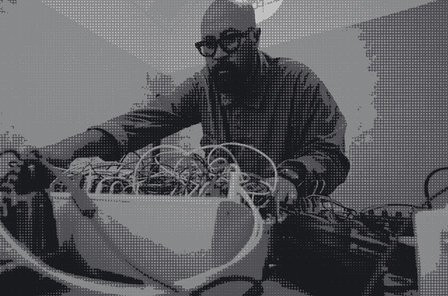
Byotōne never was a business plan but a composer trying to help the people around him breathe again. It grew out of a private daily practice at L'Étude, our design studio, kept by the composer who founded it. Jean Marc Virard had spent 25 years making music: film scores, brand soundscapes, sound design for other people's projects. When the world went quiet, he turned that craft inward and began building acoustic rooms for the team and their inner circle, spaces where a tired body could finally let go.
We started with our own people. Private retreats, safe rooms, sound built for the friends inside them. When we saw what it did, the physical release, the calm, the clarity and focus, it stopped being a ritual and became a way of life.
From a courtyard
What happened in those rooms was hard to keep private. The sessions grew into what the team called synth baths, slipped into yoga classes and breathwork circles. One of the early adopters was Rob English of the agency THE WORK, who had been living with the music himself and loved what it was doing for him and wanted to build a home for the concept. Together we created THE DEEP END, a series in a hidden courtyard on Almont Drive, West Hollywood.
The courtyard became home. A recurring audience came back week after week. The same thing kept happening: shoulders dropping, breath slowing, whole rooms settling at once. That was the proof that mattered. Sound made with somatic intent really does unlock a nervous system.
Our current journey
Today the ritual travels: campus decompression zones, progressive retail spaces, private pop-ups and wellness centers worldwide. Different rooms, same intent. The goal is not a bigger series of events, it is to make this kind of rest ordinary. Rest gets treated as a luxury when it is a biological need, so we built the whole system to move. If a room can hold it, the session can happen there.
The courtyard taught us the other half. People came back for the room as much as for the sound. Further out, we want it built into the architecture instead of carried in a case: an invisible layer that keeps working long after we leave.